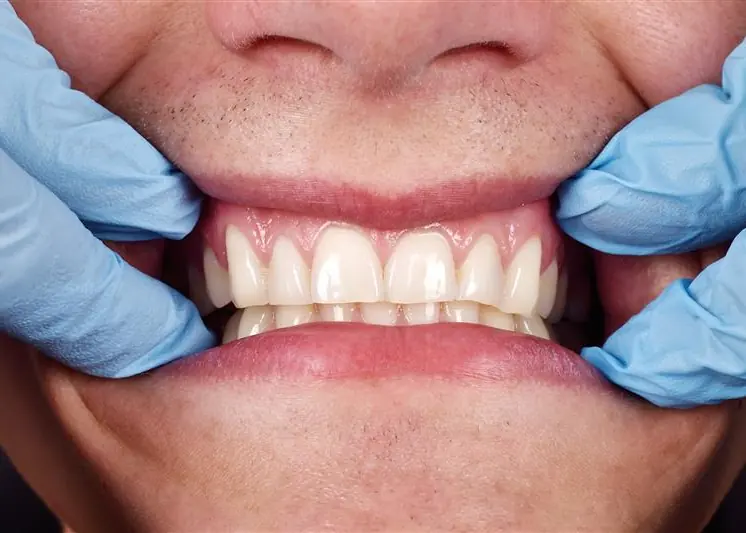
Gum disease is characterised by several common signs: bleeding, swelling and redness. Sometimes these come with pain or unpleasant sensations, and sometimes with bad breath. Loss of gum height and the formation of pockets around the teeth. Exposure of tooth roots in the mouth, with sensitivity to various stimuli.
These conditions are called gingivitis (involving only the gums) and periodontitis, which involves the whole system around the teeth.
What are the common causes?
A bacterial factor — which can be mild or severe:
- Infection caused by tartar building up above the gums or at the gum line. A thorough cleaning by a dental hygienist and good oral hygiene solve the problem.
- Infection caused by tartar penetrating below the gum line, to a depth of 5–6 mm. Treatment by a hygienist or a dentist, with local anaesthesia.
- Infection caused by aggressive bacterial penetration without tartar — instead, a thin layer of very aggressive bacteria forms on the surface of the neck and root of the teeth. This is the least pleasant case and causes the most destruction around the teeth: gum recession and pockets around the teeth.
Treatment in this case is removal of the bacterial layer from the tooth surfaces under control (with suitable magnification and lighting), removal of inflamed and infected tissue, and suitable antibiotic treatment — a combination of antibiotics known as the Winkelhoff Cocktail, named after the scientist who developed it.
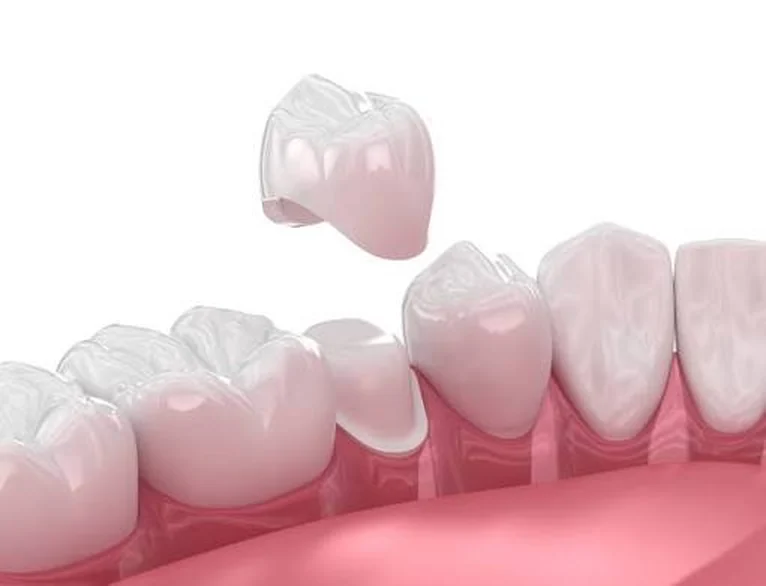
Other causes of gum problems are faulty fillings and crowns that injure the gums and cause food impaction, and an unbalanced bite, which overloads some of the teeth and leads to inflammation around them.
There are many other factors that a dentist can identify in order to help the patient.